Airport transfers are often the first and last part of a business trip, which means they shape how a visitor experiences your organisation. A smooth arrival sets a positive tone for meetings; a confused one can unsettle an otherwise well-planned visit. This guide covers the practical details that make corporate airport transfers in London easier to organise, whether you are booking for one executive or a visiting team of thirty.
Know which airport, and which terminal
London is served by several airports, and each works a little differently:
- Heathrow has four passenger terminals in use: Terminals 2, 3, 4 and 5. Airlines are allocated to specific terminals, so always confirm which one your traveller is using.
- Gatwick has two terminals, North and South, linked by a shuttle. Check the booking or airline information for the correct one.
- Stansted operates from a single terminal building.
- Luton also has a single terminal.
- London City has a single terminal close to Canary Wharf and the City, which makes it popular for short business trips.
Giving the correct terminal in your enquiry avoids last-minute changes and helps the team plan the pickup point.
Share flight details early
Include the flight number, scheduled arrival or departure time and the airport in your request. This gives the team the information they need to plan the collection time. If your traveller’s plans change, for example a rebooked flight, let the team know as soon as possible so the arrangements can be reviewed.
For departures, think about the time your traveller needs to be at the airport rather than the flight time itself. Corporate travellers often have check-in, bag drop or lounge plans, and London traffic varies considerably by time of day. The team can advise on a sensible collection time, but journey times are always dependent on traffic and conditions on the day.
Match the vehicle to the traveller
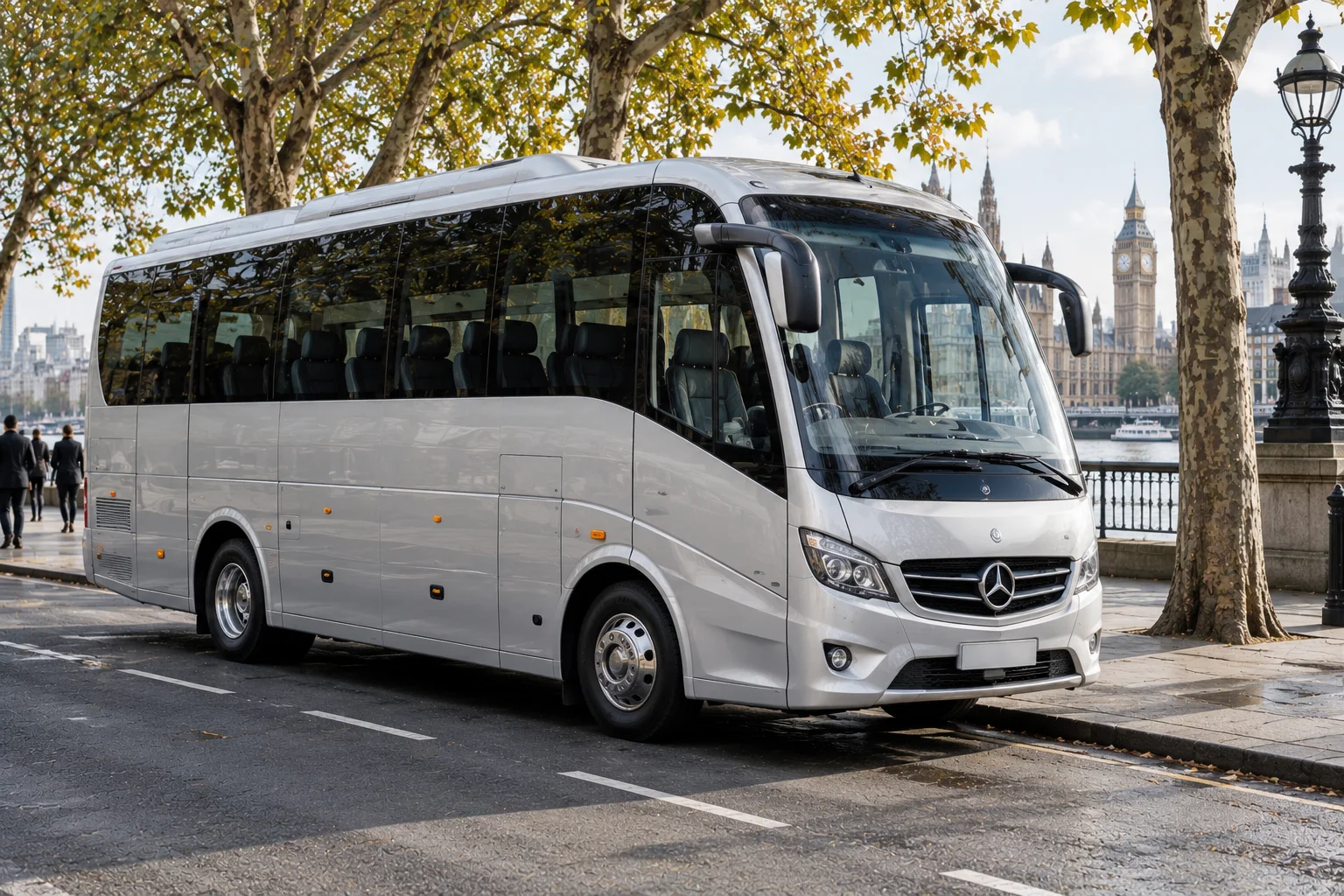
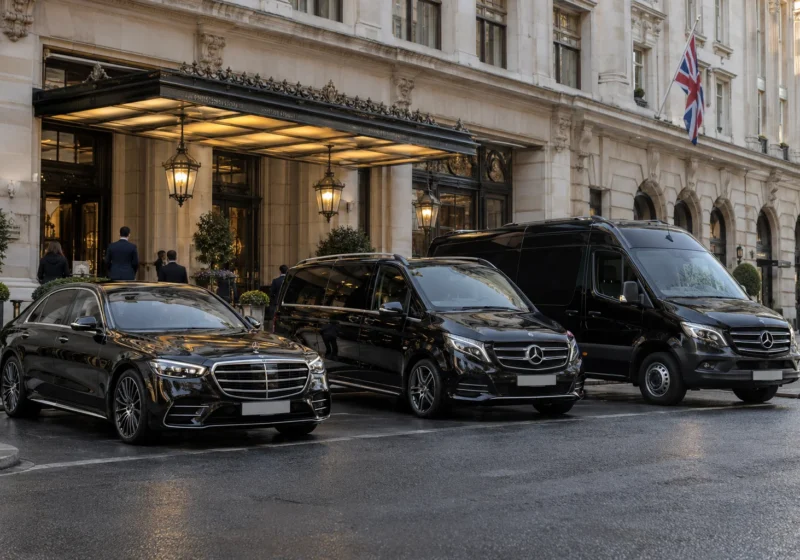
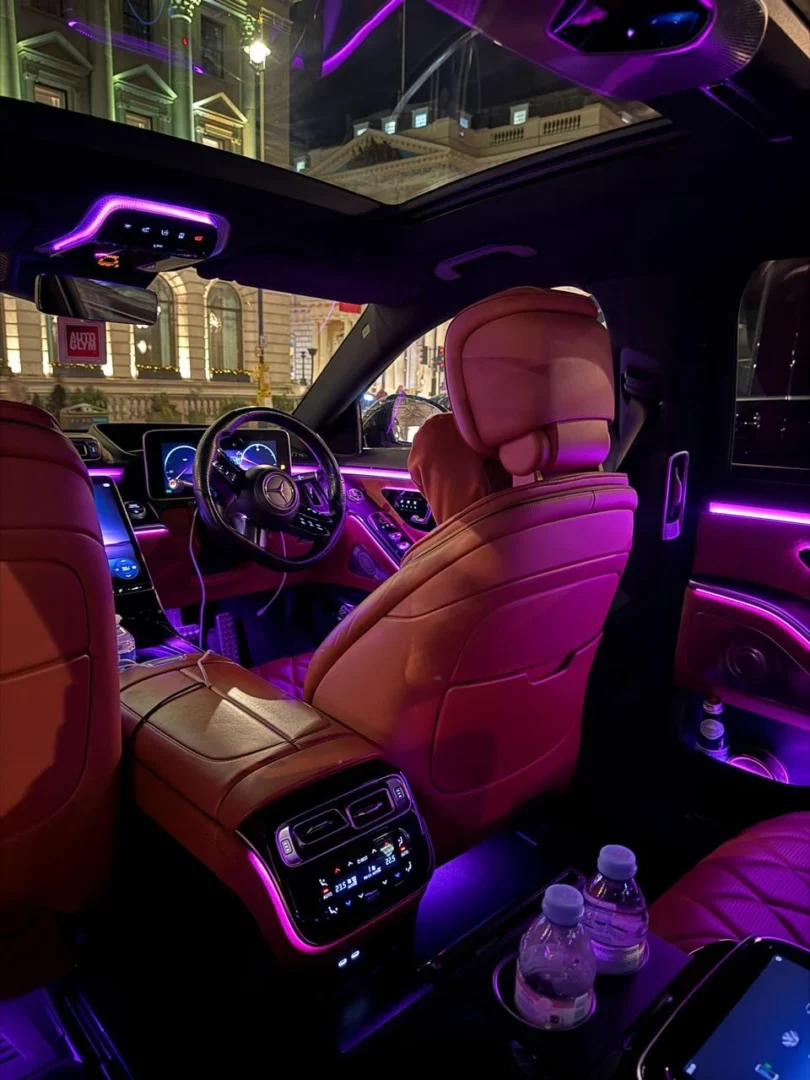
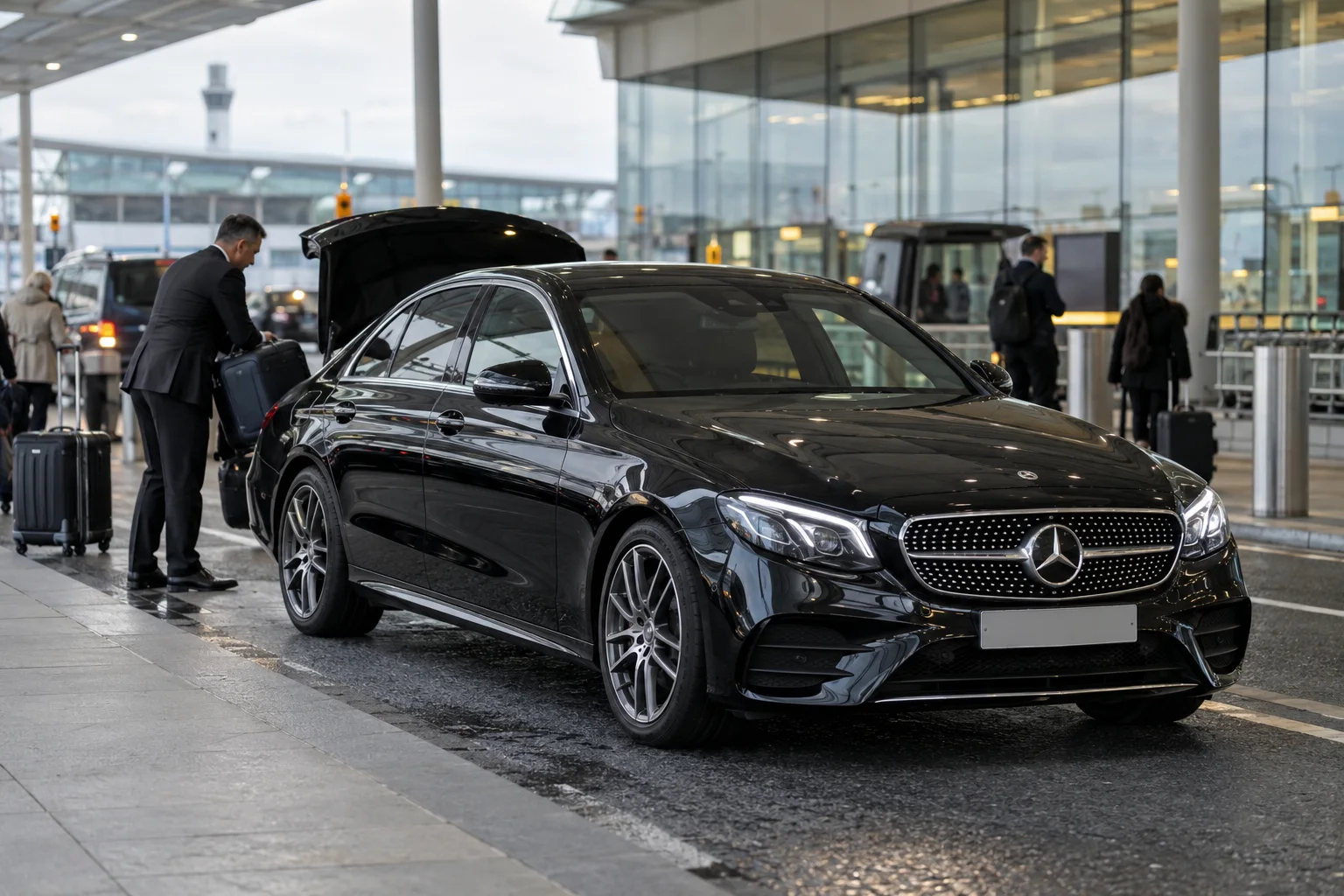
For one to three passengers, an executive car such as the Mercedes-Benz S-Class or E-Class is a natural choice for senior staff and clients. A Mercedes-Benz V-Class suits small teams travelling together, particularly if they are carrying more luggage. For larger delegations, a 16-seater minibus, 24-seater midi coach or coach can keep everyone together.
Business travellers often carry more than you might expect: presentation materials, samples or extra cases for longer trips. Describe the luggage in your enquiry and the team will confirm a suitable vehicle.
Coordinating several arrivals
Visiting teams rarely arrive on a single flight. When colleagues are landing at different times or different airports, you have a few options:
- Separate transfers for each arrival, so nobody waits for anyone else.
- Grouped collections where arrivals are close together, using one larger vehicle.
- A combination, for example a minibus for the main group and an executive car for a late arrival.
A simple spreadsheet or itinerary listing each traveller, flight, arrival time and destination makes this much easier to plan. Our booking form allows you to attach an itinerary file, which is particularly helpful for larger groups.
Clear pickup instructions
Make sure your traveller knows how they will meet their driver. Include a mobile number for the lead passenger in your enquiry so the driver can make contact if needed. If you would like a meet-and-greet arrangement inside the terminal, mention it when you enquire and the team will confirm what can be arranged for that airport. The same applies to any waiting time you expect to need, for example if a traveller may be delayed at passport control or baggage reclaim.
It also helps to brief your traveller on what to expect: who to look for, which number to call and where they are going. A short email the day before can prevent a lot of uncertainty after a long flight.
Plan the return journey at the same time
If you know when your visitors are flying home, request the return transfer in the same enquiry. This gives the team a full picture of the trip and saves arranging it separately later. If the departure time is not yet fixed, mention that a return will be needed and confirm the details once they are known.
Hotels, offices and onward travel
Many corporate transfers do not end at a single address. A visitor might go from Heathrow to a hotel in Kensington, then on to an office in Canary Wharf the next morning. If the trip includes several journeys, our hotel transfers and corporate travel services can be planned together, so one team has an overview of the whole visit.
A quick checklist
- Airport and terminal for each journey.
- Flight numbers with scheduled times.
- Passenger names and a contact number for the lead traveller.
- Number of passengers and a description of luggage.
- Pickup and drop-off addresses.
- Any requests such as meet-and-greet, waiting time or child seats.
- Return journey details, or a note that one will follow.
- Company name and any billing or reference information.
Next steps
When you have the details, submit your enquiry or read more about our airport transfers. The team will review the request, confirm availability and send a quotation. Nothing is reserved until it has been confirmed, so for important trips it is worth enquiring as early as your plans allow.