When you are organising travel for more than one or two people, one of the first decisions is whether to book several executive cars or move everyone together in a single larger vehicle. Both approaches work well in London, but they suit different situations. This guide walks through the questions worth asking before you send an enquiry, so the vehicle you request matches how your journey will actually run on the day.
Start with how many people are travelling
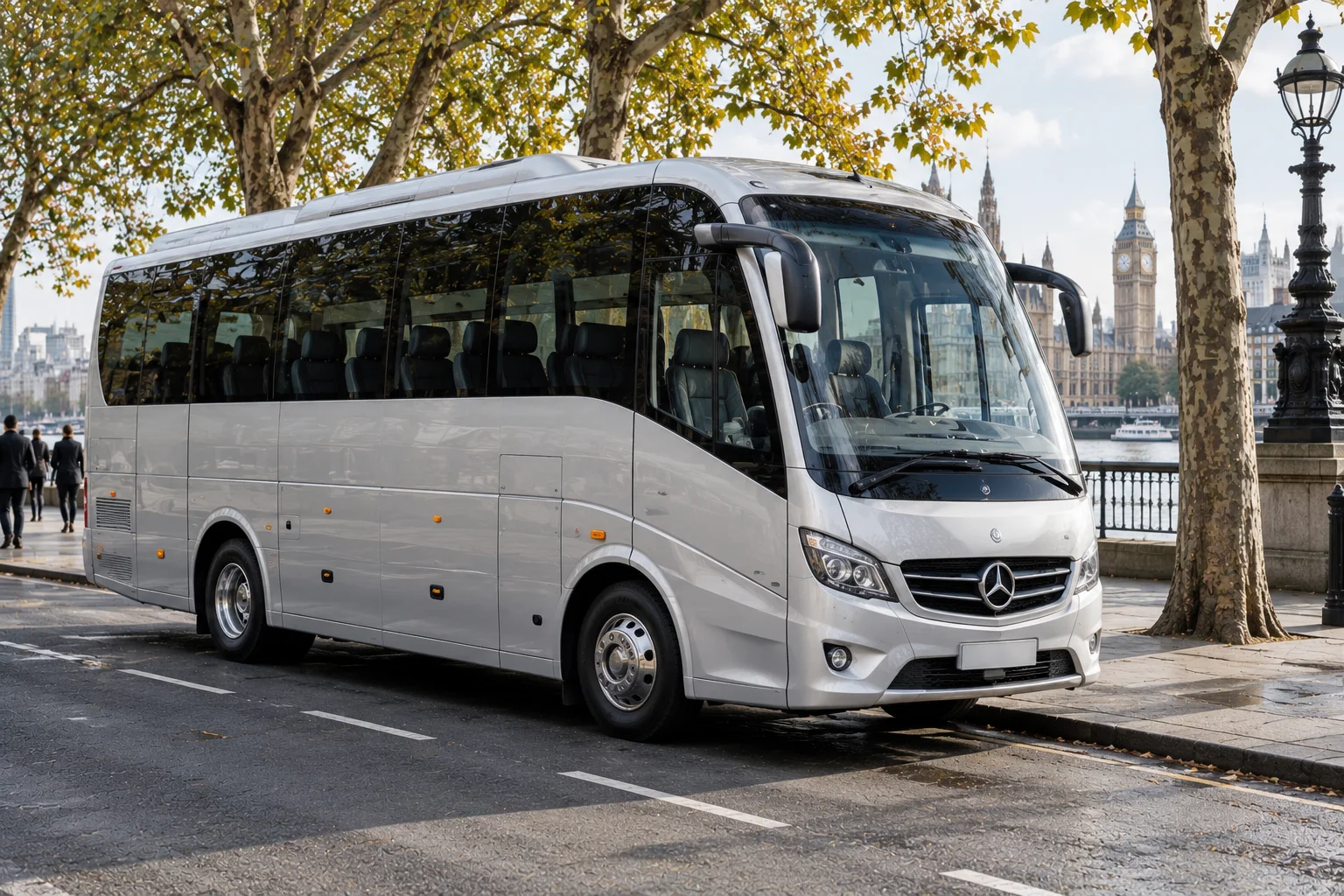
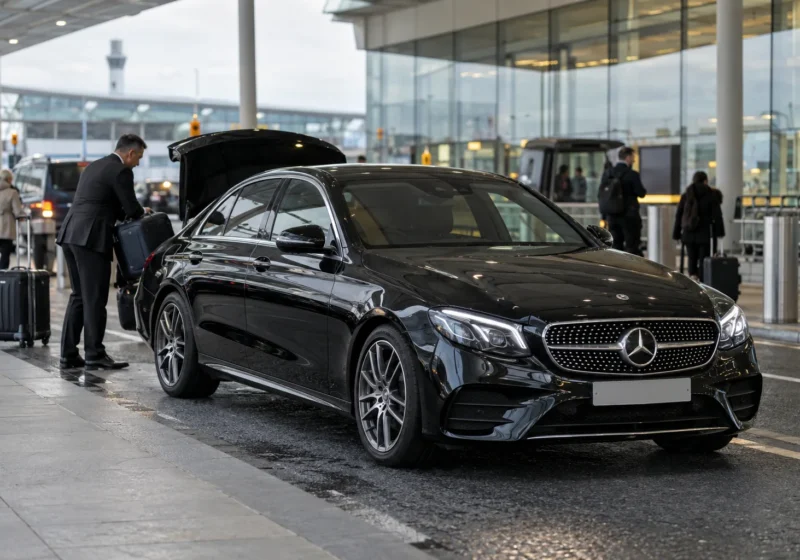
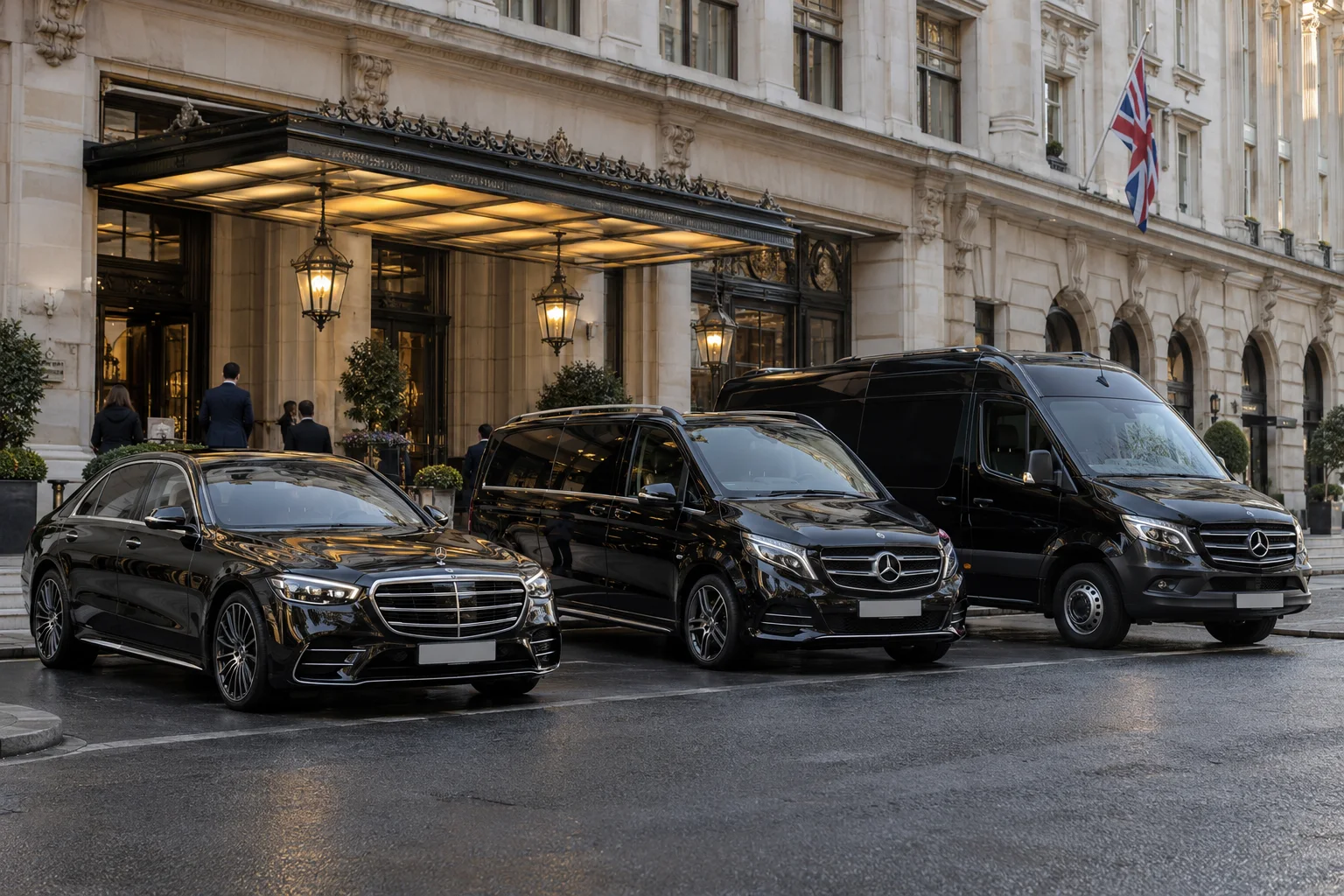
Passenger numbers are the obvious starting point, but they are rarely the whole story. A party of three can sit comfortably in a Mercedes-Benz S-Class or Mercedes-Benz E-Class. Once the group grows beyond that, the choice opens up: a Mercedes-Benz V-Class can carry a small team together, while a 16-seater minibus, 24-seater midi coach or our 32-seater and 37-seater coaches cover larger parties.
It helps to give the team a firm number and a likely maximum. If attendance might change, mention it early, because the right vehicle for twelve people is not always the right vehicle for twenty.
Are everyone’s plans the same?
This is often the deciding factor. Group transport works best when the whole party starts in roughly the same place, travels at the same time and arrives at the same destination. A team heading from a hotel to a conference venue, or guests travelling from a station to a wedding reception, fit this pattern neatly.
Executive cars make more sense when people are arriving on different flights, leaving at different times, or heading to separate addresses afterwards. Two directors flying into Heathrow an hour apart, for example, may be better served by individual cars than by asking one of them to wait. A mixed approach is also common: a minibus for the main group and an executive car for a speaker or senior guest whose schedule is different.
Think about the impression you want to create
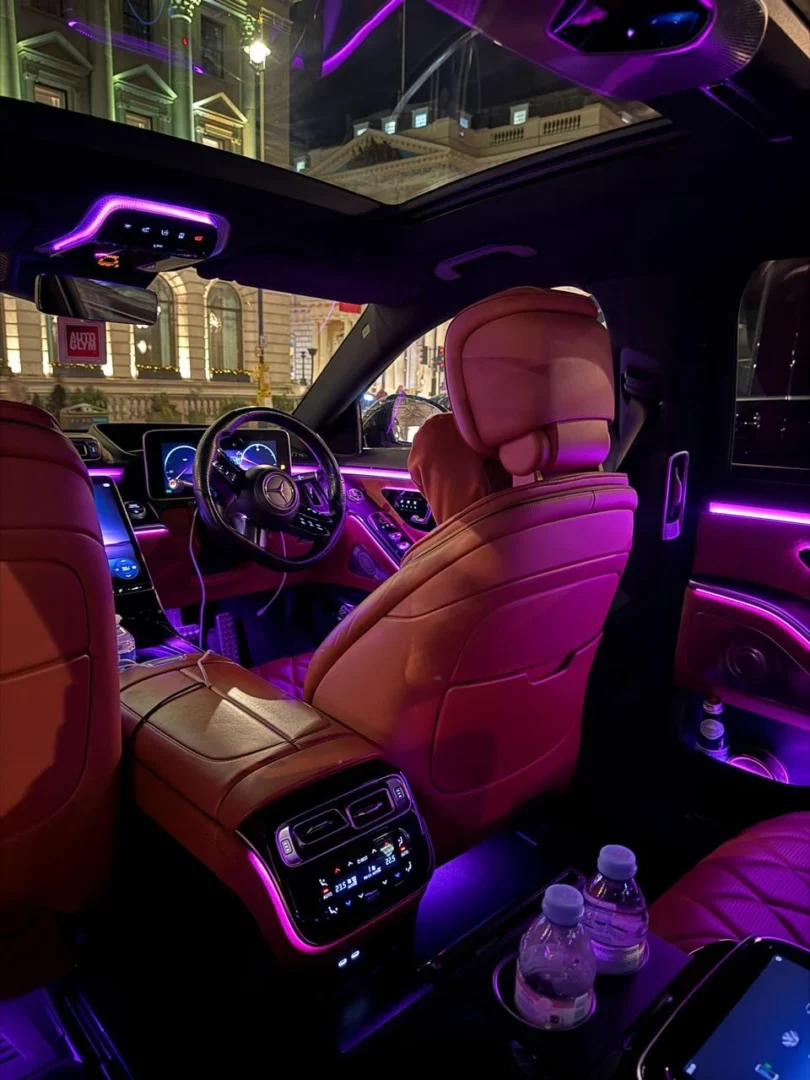
For client meetings, roadshows and VIP arrivals, the vehicle forms part of how your organisation is presented. An S-Class or E-Class gives a discreet, polished arrival for one to three passengers. The V-Class offers a similar standard of presentation for a slightly larger party who want to travel together and talk on the way.
For group occasions, arriving together can be the point. Delegates stepping off the same coach, or a wedding party travelling as one, creates a sense of occasion and keeps everyone on the same timetable. Our executive chauffeur services and coach hire pages explain how each option is typically used.
Luggage, equipment and accessibility
Luggage changes the calculation more than many people expect. A group of six with carry-on bags is very different from six people each with large suitcases, golf bags or display equipment for an exhibition stand. Because luggage space varies by vehicle and by load, we ask you to describe what you are carrying and the team will confirm what is suitable rather than relying on a fixed figure.
The same applies to any accessibility needs, child seats or other requirements. Let us know in your enquiry and the team will confirm what can be arranged.
Pickups, routes and timing
Consider how many pickup points the journey involves. Collecting ten colleagues from ten home addresses in one minibus can make for a long first leg, and the first person collected may spend a lot of time on the road. In that case, two or three smaller vehicles covering different parts of London might be more practical. If everyone can gather at one office, hotel or station, a single larger vehicle becomes far simpler.
Also think about where the vehicle needs to stop. Some central London streets, hotel forecourts and venues have limited space for larger vehicles, so mention the exact addresses and any access notes. The team can then advise on sensible pickup and drop-off points.
Cost and simplicity
We do not publish fixed prices, because every quotation depends on the vehicles, distances, timings and waiting involved. As a general principle, though, moving a group together in one vehicle is often more straightforward to coordinate than managing several separate cars, with one driver, one schedule and one point of contact. Several executive cars give more flexibility but more moving parts. When you request a quote, you are welcome to ask for both options so you can compare them side by side.
Common scenarios
- Board members arriving for a meeting: individual executive cars, timed around each person’s arrival.
- A team of six travelling to a client site: a V-Class, so everyone arrives together.
- Conference delegates moving between a hotel and venue: a minibus or coach, possibly running repeat journeys. See shuttle services.
- Wedding guests travelling from a ceremony to a reception: a coach or minibus for guests, with an executive car for the couple.
- A group flying into one airport on the same flight: a single minibus or coach for an airport transfer.
What to include in your enquiry
Whichever option you lean towards, a detailed enquiry helps the team recommend the right vehicles. Useful details include:
- The number of passengers, and whether that number may change.
- Pickup and drop-off addresses, plus any additional stops.
- Dates and times, including any return journey.
- Flight or train details where relevant.
- A description of luggage or equipment.
- Any special requests, such as child seats or a particular vehicle.
If you are unsure, simply describe the journey and say you would like a recommendation. You can browse the full fleet for a sense of each vehicle, then send your journey details. The team will review the request, confirm availability and come back with a quotation.
Summary
Executive cars suit small parties, separate schedules and occasions where individual presentation matters. Group transport suits larger parties who start and finish together and benefit from a single timetable. Many journeys use a combination of both. Starting from your passenger numbers, timings, pickups and luggage will usually point clearly to the right answer, and the team is happy to talk it through with you.